Israel recently announced the potential opening of the Rafah crossing, which would allow for Palestinians seeking medical care to leave the Gaza Strip to Egypt.
The Coordination of Government Activities in Territories (COGAT), the Israeli Ministry of Defense unit that oversees civilian policy in Gaza and the West Bank, said that the opening of the crossing will be coordinated with Egypt and supervised by the European Union mission.
“The residents’ exit through the Rafah Crossing will be facilitated through coordination with Egypt, following security approval by Israel and under the supervision of the European Union mission,” COGAT said in an X post.
The reopening of the crossing would allow for Palestinians in Gaza to seek medical aid. According to the United Nations, 16,500 people in Gaza need medical care outside the region.
Israel and Egypt have clashed over the opening of the crossing. Israel has refused to open the crossing both ways, only allowing Palestinians to leave Gaza into Egypt, saying the crossing will not open on both sides until Hamas returns the final remains of deceased hostages still in Gaza.
Israel received and confirmed the remains of one of the last deceased hostages in Gaza, Sudthisak Rinthalak, an agricultural worker from Thailand, on Dec. 4. Currently, only one deceased hostage, Ran Gvili, an Israeli police officer, still remains in Gaza.
The Egyptian government criticized Israel’s one-way crossing decision, only allowing the crossing to open if it opens both ways, citing its refusal to be complicit in the mass displacement of Palestinians.
“We will not accept it, we will not participate in it, and we will not allow it to happen,” Egyptian Foreign Minister Badr Abdelatty told CNN.
Egypt also backed the creation of a Palestinian state in the Gaza Strip, the West Bank and east Jerusalem, in part of a two-state solution, fearing that Palestinian displacement would stop that.
Other Arab countries in the region see the one-way crossing as a move to “encourage the movement of Palestinians out of Gaza, not to return,” said Adina Friedman, a lecturer at the Joseph and Alma Gildenhorn Institute for Israeli Studies at the University of Maryland.
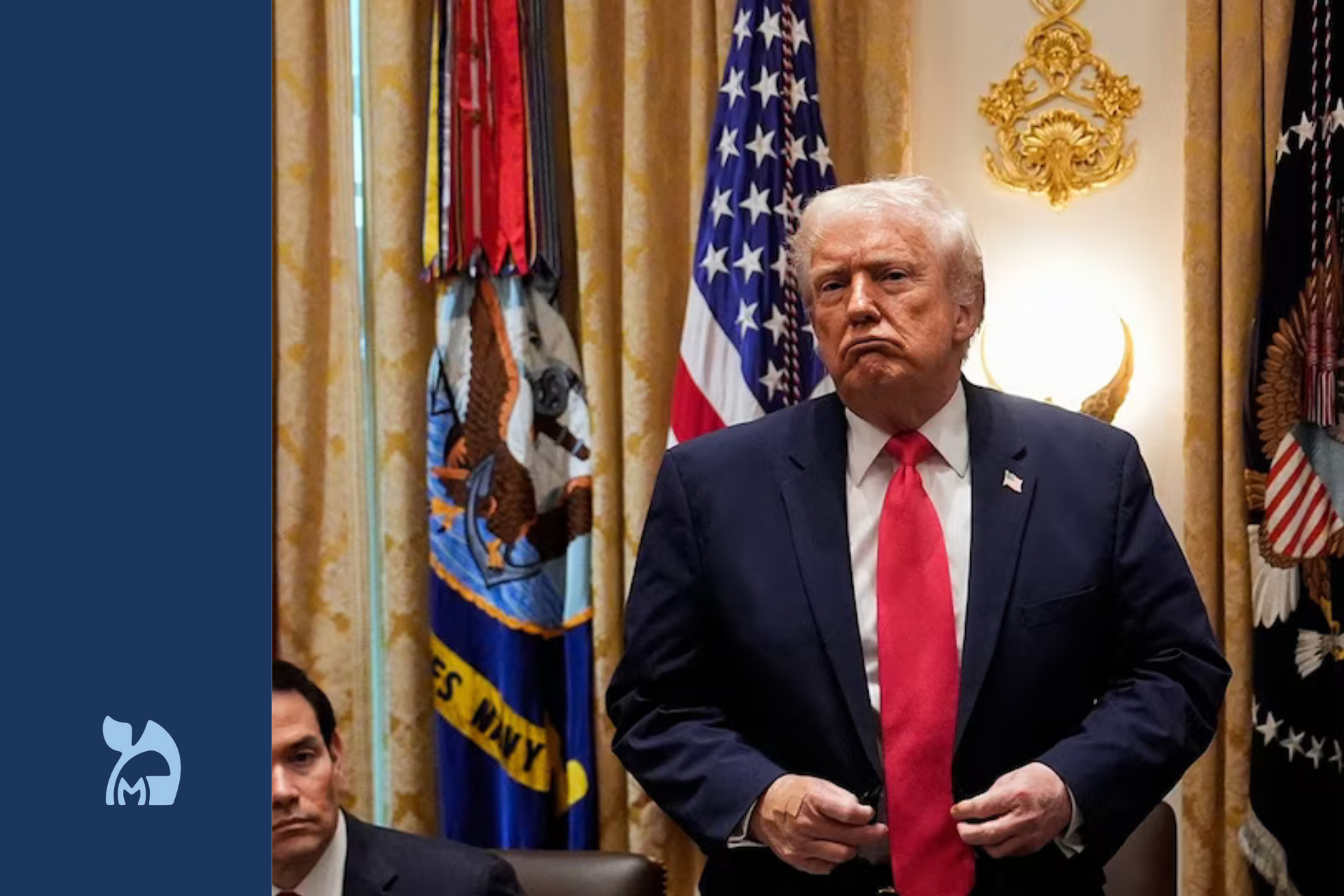
Israel’s decision of a one-way crossing differs from President Donald Trump’s 20-point peace plan that brokered a ceasefire between Israel and Hamas in October, as Trump intends for the crossing to open in both directions.
“Opening the Rafah crossing in both directions will be subject to the same mechanism implemented under the 19 January 2025 agreement,” the 20-point peace plan stated.
The agreement in January originally helped negotiate a ceasefire between Israel and Hamas, a ceasefire that was broken in March.
The White House said that President Trump is currently pushing for a meeting between Israeli Prime Minister Benjamin Netanyahu and Egyptian President Abdel Fattah el-Sisi to resolve disagreements.
Ilai Saltzman, an associate professor of Israeli Studies at the University of Maryland, says the negotiations will be far from easy.
“It’s going to take a lot of time, a lot of diplomacy [and] a lot of arm twisting. Trump has a very difficult time ahead of him,” Saltzman said.
While the October ceasefire agreement between Israel and Hamas slowed violence, bursts of conflict have still erupted throughout the region, as the two sides have traded blame for violating the U.S.-brokered ceasefire.
Recently, an Israeli missile attack killed five Palestinians, including two children in southern Gaza. The Israeli military claimed the strike was targeting a “Hamas terrorist,” in response to an earlier attack that day that wounded five Israeli soldiers.
Despite the possible reopening of the Rafah crossing sparking hope for progress toward ending the Israel-Hamas conflict and rebuilding the Gaza Strip, Adina Friedman, a lecturer for Israeli Studies at the University of Maryland, says it’s only a small step.
“We’re far from the end of the conflict,” said Friedman, adding, “it would be a good step, but a limited step in the big picture.”
Saltzman similarly echoed this caution, saying that the situation is “difficult to read at the moment, ” with many key players beyond the United States involved in post-war development.
“There’s a lot of stakeholders involved,” Saltzman said. “They have different visions for the region, for the Gaza Strip, one that is in a collision course with the Israeli vision.”
Saltzman saw regional players like Qatar and Turkey as “a thorn in Israel’s back,” opposing the disarmament of Hamas and ensuring the group remains in place throughout Gaza.
Other regional players aim to dismantle Hamas and advance reconstruction plans for Gaza, attempting to capitalize on the region through infrastructure investment.
Saudi Arabia and the United Arab Emirates have expressed interest in investing in emergency reconstruction and humanitarian efforts in the enclave, with the UAE advocating for the creation of a Palestinian state. However, both countries want to be assured by the Israelis and Americans that the war is completely over, before fully investing in emergency infrastructure and humanitarian efforts.
“It doesn’t make sense for them to pour millions and billions of dollars, and then only find out that it’s been destroyed once again as a result of the resumption of the conflict,” Saltzman added.
As negotiations between Israel and Egypt persist, the potential reopening of the Rafah crossing – whether one-way or two-way – may serve as a preview for what post-war life in the Gaza Strip will look like.