Within Orthodox Judaism, the Gemara functions as the bridge between the divine text of the Torah and the reasoning of human intellect. Composed of both halakhic discussion and aggadic narrative, it is not merely a legal code, but a dynamic record of debate and moral formation. Its immense complexity has made it both foundational to Jewish continuity and vulnerable to misunderstanding.
Medieval Christianity was unkind to Jews. In 1290, King Edward I expelled all Jews from England (only to allow them to return in 1656). France followed suit in 1306, then Switzerland in 1348, and finally Germany in 1394. Jews weren’t banished out of the blue; these royal decrees came after periods of intensifying hostility towards Jewish communities. Often times, this manifested in Gemara disputations. These disputations sought to “disprove” and alienate Judaism through tokenizing Gemara passages that were either offensive to Christians or passages they felt validated Jesus as the messiah.
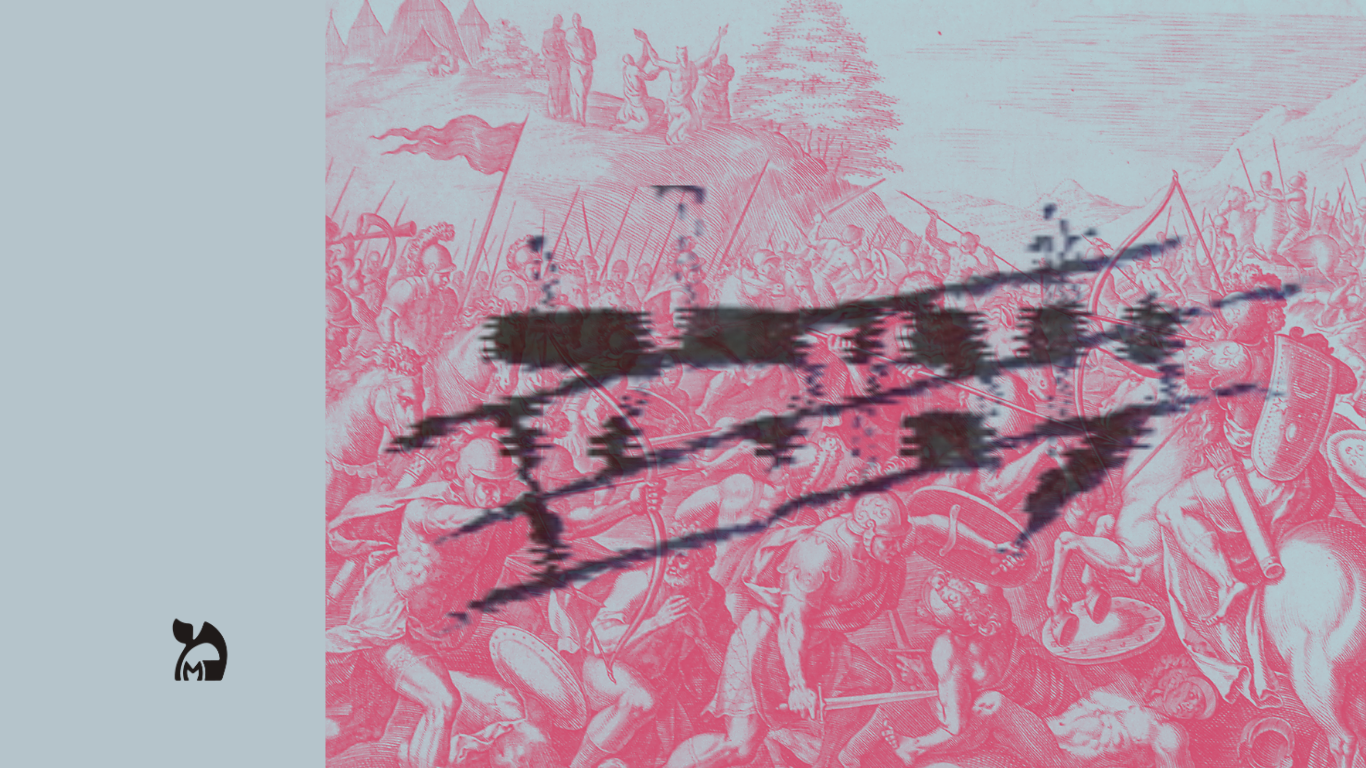
Fueled by Jewish internal strife, Karaite influence, and apostasy, the first major dispute occurred in 1240, known as the disputation of Paris. In 1236, an apostate named Nicholas Donin, a former student of Gemara scholar Rabbi Yechiel of Paris, submitted a letter to Pope Gregory IX listing 35 charges of blasphemy against the Gemara. Little is known about the disputation itself or the verdict, though the result was clear. Two years later, on June 6, 1242, 24 wagon loads of Gemaras, totaling thousands of volumes, were handed to the executioner for public burning.
A little over twenty years later, in 1263, the dispute of Barcelona occurred. The Ramban, after being forced to participate in a public debate, was assured immunity; however, afterwards, he had to flee for his life on account of blasphemy against Jesus. It is recorded that James I gave the Ramban 300 gold coins and assured him he had never heard “an unjust cause so nobly defended.” Due to political pressure, James I eventually ordered the removal of what he considered offensive Gemara passages.
In the past year, a new anti-Gemara sentiment has reemerged, popularized by Candace Owens, Nick Fuentes, and many other outspoken figures. Many of the claims and manipulations of these individuals are recycled from self-proclaimed antisemites, like the Nazi, Alfred Ernst Rosenberg. While some Gemara ideas can feel confusing and even troubling, the mainstream media tokenized statements that are either completely fabricated or manipulated. Some work is currently being allocated towards addressing these lies, and it is important to avoid ignorance.
A legitimate qualm that can be found in the Gemara is a perpetual urge against many types of interaction with non-jews. This can be troubling to a modern learner who cherishes the interactions he has with the world around him. Rabbi Menachem Meiri, a thirteenth-century Gemara scholar and Jewish leader from Provence, qualifies these measures in an extremely novel and progressive way.
In his Gemara commentary, called the Beit Habechirah, he writes, “all people who are of the nations that are restricted by the ways of religion and worship the divinity in any way, even if their faith is far from ours, are excluded from this principle [of inequality]…with no distinction whatsoever.”
It is crucial to reiterate that the Meiri’s position on non-Jews was an outlier in medieval times. While Jews certainly interacted with non-jews, their integration into secular society was often a result of economic need or to prevent hatred. In Jewish ritual, the principle of Shaat Hadachak, a time of need, can override a rabbinic law. Meaning, the collective Jewish disobedience of the normative rabbinic ordinance against interacting within non-jews happened first, and only after, the Rabbis came up with justifications for something that was already not being followed. The case of Shaat Hadachak enabled the Jews to do something that, in other circumstances, would not typically be permitted.
Some try to argue that the Meiri’s approach was concessionary and a mere attempt to avoid problems with non-Jews. However, it is difficult to understand the Meiri’s opinion as apologetic, when “he took himself out of the halakhic mainstream in which, in all other matters, he strove so studiously to remain.” Had he been a firebrand reformist, his diversion from mainstream rabbinical decree would not be as striking. Furthermore, he himself interacted a lot with non-Jews, as he notes in his book on he repentance, that it was inspired when “a gentile (presumably Christian) acquaintance remarked to him on the Jews’ obliviousness to the true meaning of repentance.”
In more modern times, many mainstream Orthodox thinkers and authorities not only support but also emphasize a more pluralistic worldview, with an emphasis on being “a light to the nations.” While many of these thinkers use messianic visions of universal peace from Biblical texts as supporting evidence for their pluralism, it is refreshing to see a medieval commentator express these views.
The Gemara is not a static legal code, but a living organism of Jewish survival. The fires of Paris and the current recycled rhetoric stem from treating the Gemara as weapons rather than parts of a divine system. For the Orthodox Jew, the challenge is not to apologize for the text but rather to master its depth, ensuring that our interactions with the world are guided by the same intellectual rigor and moral clarity that has sustained the Jewish tradition through centuries of exile.