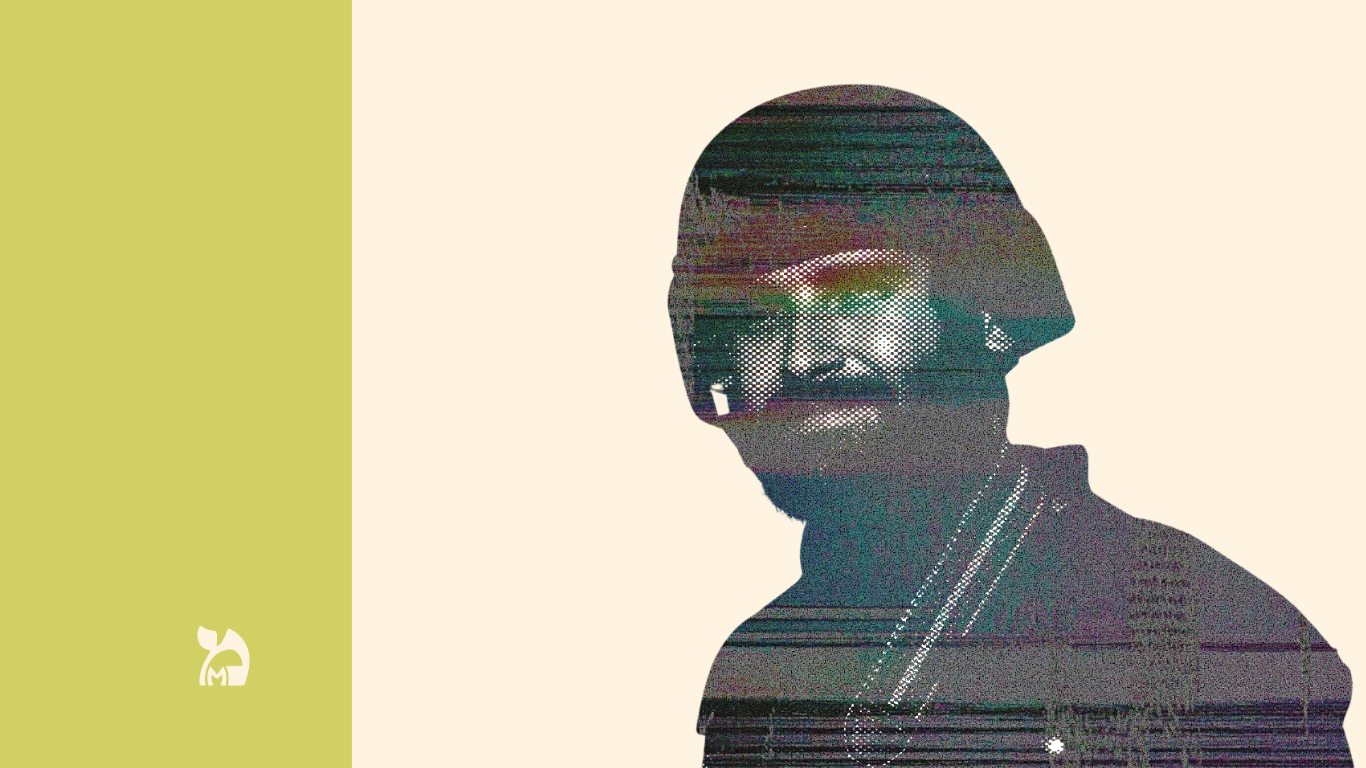
Sagi Gabay, a survivor of the Nova music festival, came to the University of Maryland on Wednesday to speak to students about his experience on Oct. 7, 2023.

Gabay, a 29-year-old Israeli from Rishon LeZiyyon, said he almost didn’t attend the festival, but his then-girlfriend convinced him to go.
Arriving at 2 a.m., Gabay immediately noticed the positive atmosphere of the festival.
“It was amazing. A lot of beautiful people,” he said with a grin. “Everyone was smiling, everyone was dancing. A lot of beautiful souls.”
Gabay recalled looking at the sky around 6:30 a.m. and seeing the most amazing sunrise of his life. Just then, he also noticed “sparkling objects in the sky,” which he soon identified as thousands of rockets.
Though rocket fire was familiar to a native Israeli like him, he felt this was different. Gabay told his girlfriend that he wanted to go home.
After hearing festival goers yell “tzevah adom,” or “red alarm” in English, Gabay and his friends jumped into his car and turned onto the main road. They passed a car full of bullet holes. Gabay instructed his girlfriend to pull over next to a roadside bomb shelter, commonly found in Israel.
The shelter they entered was the same one that Hersh Goldberg-Polin and his friends were hiding in. Again, Gabay felt that something was wrong, and he instructed his friends to leave the shelter.
Just four minutes after leaving, terrorists came into the shelter, throwing grenades and kidnapping hostages, including Goldberg-Polin.
Gabay and his friends escaped to an open field where hundreds of people were running for their lives. He ran for over 30 minutes, seeing villages burning around him.
When his girlfriend suggested calling the police, he told her, “There are no cops right now. There’s no army. There’s no country.”
After four hours and 14 miles on foot, his group eventually made it to a village, Patish, where others were taking shelter.
“Their faces were empty, like their soul was shut down,” Gabay said about the other survivors there. “We felt like refugees in our own country.”
He eventually got a ride home, only noticing in the car that he had ripped open his pants and sprained his ankle from falling earlier.
Though Gabay’s group of friends that he went to the festival with all survived, five of his other friends were killed that day.
Gabay, who was the spokesperson for Israeli Minister of Foreign Affairs Gideon Sa’ar, went back to work the next day, but eventually realized he needed to spend time healing after experiencing trauma symptoms.
For the last four months, Gabay, a lover of tennis, traveling and partying, has been going to different Jewish communities and telling his story of survival.
The event was co-sponsored by Terps for Israel, Jewish Student Union, Mishelanu and Hasbara Fellowships.
“It really puts into focus how we don’t understand the pain people have from this horrible day,” said Elle Schanzer, a sophomore undecided major who is the vice president of Terps for Israel.
Gabay expressed his changed perspective since Oct. 7. One of his main takeaways was to embrace the unexpected.
When visiting the Nova exhibit in Los Angeles, an exhibit showing footage from the festival and displaying objects found in the aftermath, Gabay immediately noticed his hat that he lost which said “California” on it.
“The only certain thing in life is the uncertainty,” Gabay said.
He eventually returned to the Nova site with other survivors, taking time to heal and connect with others.
“What belongs to the Jewish people is resilience. The passion for life,” Gabay said. “The energy of life, the power of life, is more powerful than anything”
When asked how he responds to anti-Israel hate, Gabay made two peace signs with his fingers.
“I believe in freedom, peace and love,” he said, smiling.