Directed, written, and produced by Zach Cregger (Barbarian), Weapons follows the unsettling disappearance of 17 children from the same classroom at exactly 2:17 a.m. (all except one, Alex). The film unfolds through multiple perspectives—an embattled teacher, a grief-stricken father, a troubled cop, before revealing a dark supernatural force at the center.
With an ensemble-like, chapter-based structure, the film builds tension through layered storytelling. With each chapter interweaving characters in the story, or revisiting a scene with new found context. I especially like that it doesn’t reveal too much in each chapter, giving audiences enough information to start to piece together the mystery, without revealing everything at once. Each chapter builds in tension and mystery, then it reaches a boiling point and then switches to the next chapter. For some viewers that can be irritating, however, I felt that it added to the suspense and built up each character’s perspective and how the situation affects them.
The movie has this lingering weirdness to it where you aren’t sure in some scenes to be laughing or scared. The movie balances these two tones of horror and comedy surprisingly well, all things considered for such an absurd idea. I think it works overall to benefit the movie, it doesn’t take itself too seriously but at the same time can be quite scary.
One scene in particular stands out (minor spoilers ahead). While investigating one of the family’s houses, Justine falls asleep in her car parked on the road nearby. The camera cuts to a wide shot of the house as the front door slowly creaks open, and a figure steps outside. At first, it plays like a familiar horror setup, the kind you’ve seen a hundred times. But as the character approaches the car, the camera shifts lingering on Justine as she sleeps, while the figure peers in through the window. Instead of delivering the expected scare, the figure simply walks away. The shot holds uncomfortably on Justine, until the sound of a car door opening breaks the silence, followed by an arm reaching inside toward her.
What makes this scene so effective is emblematic of the film as a whole: the jump scares and gore are deployed with precision. They’re never overused, instead appearing exactly where they’ll have the most impact. Most of the jump scares are front-loaded in the early chapters, while the gore is mainly reserved for the final act. This pacing creates a gradual build of tension, making the atmosphere feel heavier and more oppressive as the story progresses. Ultimately, the film is strong enough narratively that even without its horror elements, it would still work as a compelling story. The scares and violence don’t carry it, they elevate it.
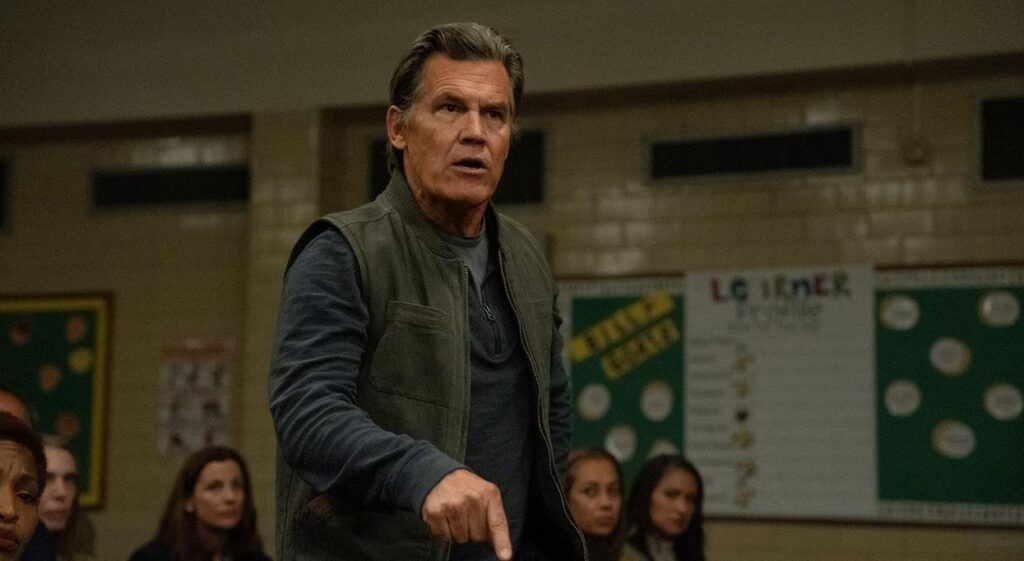
The movie is expertly cast with especially good performances from the child actor Cary Chrsitoper, Josh Brolin as Archer Graff, and Julia Gardner as the teacher. What was crazy is that nearly the entire cast was recast after filming was delayed by the SAG-AFTRA strikes, everyone except Austin Abrams, who plays the junkie.
Some viewers also take issue with illogical character decisions and contrived narrative moves, describing the structure as a “dangle of keys, lots of movement, but no real substance.” When Zach Cregger was interviewed about this issue, he mentioned that he wanted to showcase that, in tense or stressful situations, people don’t always make logical or morally right decisions. This widespread panic and misinformation can also tie into the idea of “Lashon Harah” literally meaning “evil tongue”.
This “Lashon Harah” doesn’t even need to be true in order for it to work. There is a common theme throughout the movie of parasites. In one scene, a TV in the background mentions cordyceps, a parasite that takes over ants. In the opening, Justine (Julia Garner) teaches the class about such parasites. The main villain also embodies this theme of parasites, by sustaining themself through manipulation and exploitation, all while hiding in plain sight. The idea also works on a metaphorical level, giving the story even more depth.
The widespread use of misinformation makes the characters act in illogical and immoral ways. This is shown in how quickly the students’ parents turn on Justine, the teacher, making her the focus of community suspicion because of her spotty past. Archer, a grieving parent, yells at her at a school meeting and then follows her around and accosts her again at a gas station. Everyone was so busy pointing fingers that, in the end, the irony of the person who solves the mystery is the junkie.This shows how “Lashon Harah” can infect everyone like a parasite and manipulate people into doing terrible things and think irrationally, even if it’s misinformation. Overall, I think Weapons is one of the best movies of the year. I would even confidently say it is the best horror movie of the year. With its fresh premise, and tense fragmented storytelling, it makes for a great film that leaves viewers wanting more.