Zohran K. Mamdani has now won the election as mayor, and people need to take a breath. His election doesn’t directly mean the city is unsafe or that radical Islam is taking over the country. That kind of talk is both unfounded and harmful. Instead, he deserves the same due diligence and respect as any elected leader. The goal should be to work with him, not automatically against him, to make New York better for everyone, Jewish, Muslim, Christian, atheist, or otherwise.
The mayor of New York City has considerable administrative power but not unlimited control. The office can appoint and remove commissioners, shape the city budget, and veto local laws. However, many of the city’s biggest challenges, especially housing, taxation and transportation, depend on cooperation with state authorities in Albany. Major projects like rent freezes or fare-free buses also require legislative and budgetary approval outside the mayor’s direct reach. This means even if Mamdani has ambitious plans, he will run into hard limits on what he can unilaterally change.
Mamdani’s only prior elected experience was serving in the New York State Assembly, where he was first elected in 2020 and re-elected in 2022 and 2024. Yet despite this “long stint,” his legislative productivity appears limited: records show he missed about one-third of the 2025 session days. While he introduced numerous bills, only one was reported to have passed the Assembly during that year, and he was not present for the roll-call vote when it occurred.
Mamdani’s mayoral campaign outlined several sweeping initiatives. These include a citywide rent freeze on rent-stabilized apartments, building over 200,000 new affordable housing units, launching city-run grocery stores to counter rising food prices, providing free public bus service, introducing universal childcare for children from six weeks to five years old, and raising taxes on the wealthy and corporations to pay for these programs. These ideas attracted younger and progressive voters, but many economists and policy analysts question whether such goals are feasible without long-term economic strain (Time Magazine; Financial Times).
A rent freeze might offer short-term relief, but it risks discouraging landlords from maintaining or improving housing stock, leading to long-term deterioration and reduced supply. Moreover, New York’s Rent Guidelines Board, not the mayor, determines adjustments to rent-stabilized units, so Mamdani would have to influence the board rather than dictate outcomes .
While city-run grocery stores sound idealistic and utopian, the city lacks experience in food retail. Without clear logistics, supply-chain partnerships, and sustainable pricing, these stores could easily become underfunded or symbolic rather than functional. A more effective route might be expanding community-supported agriculture (CSA) networks or incentivizing existing grocers to open in underserved areas.
Free bus service could cost hundreds of millions of dollars annually. Fare elimination has had moderate success in smaller cities like Kansas City, which ended due to budget cuts. But scaling that model in New York, where the MTA operates independently of the mayor’s office, would demand state cooperation and a massive funding shift . A fairer, more workable compromise might involve targeted subsidies for low-income riders or expanded half-fare programs.
Raising taxes on high earners would require coordination with Albany, which has historically been resistant. New York already ranks among the highest-taxed jurisdictions in the U.S., and additional increases could accelerate business departures or reduce investment in the city’s job market.
To make his vision more viable, Mamdani could focus on incremental rent reforms, such as stronger tenant protections and incentives for landlords who commit to long-term affordability. He could also partner with nonprofits and local entrepreneurs rather than directly running grocery stores, reducing costs while improving accessibility. Another option would be to pilot reduced-fare bus zones in underserved boroughs instead of citywide free transit. Finally, he could use public-private partnerships to fund early-childhood programs, following models that have worked in Boston and Washington, D.C. These adjustments would make his agenda more achievable without overextending the city’s limited financial and political capacity.
It’s also worth remembering that Mamdani’s victory was narrow. He likely benefited from Curtis Sliwa staying in the race and dividing the opposition vote. Meanwhile, former governor Andrew Cuomo remains one of New York’s most polarizing political figures, accused of mishandling nursing-home COVID-19 deaths and facing multiple sexual-harassment allegations. When reflecting on mistakes made in his term as Mayor, Cuomo left out both of those grievances
In that context, Mamdani’s rise reflects both voter fatigue with establishment politics and a desire for a new voice, even if many disagree with his platform.
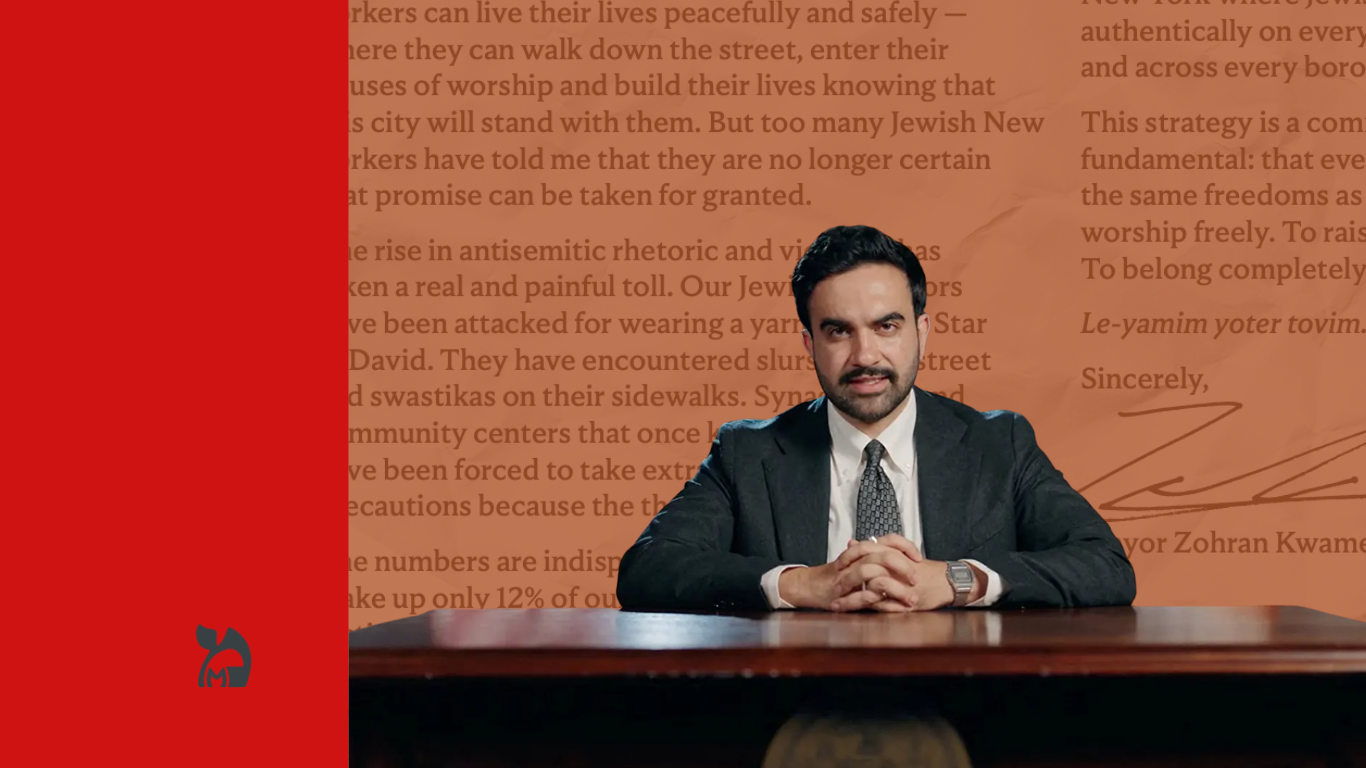
Although I personally am skeptical of much of Mamdani’s political agenda, and find some of his earlier rhetoric on Israel deeply troubling, I also recognize that leadership is about growth and accountability. His positions have evolved, and the best way forward is not hostility but critical engagement. He should be judged by what he does as mayor, not just what he once said. Working together to improve New York for all communities is far more productive than fear or division.