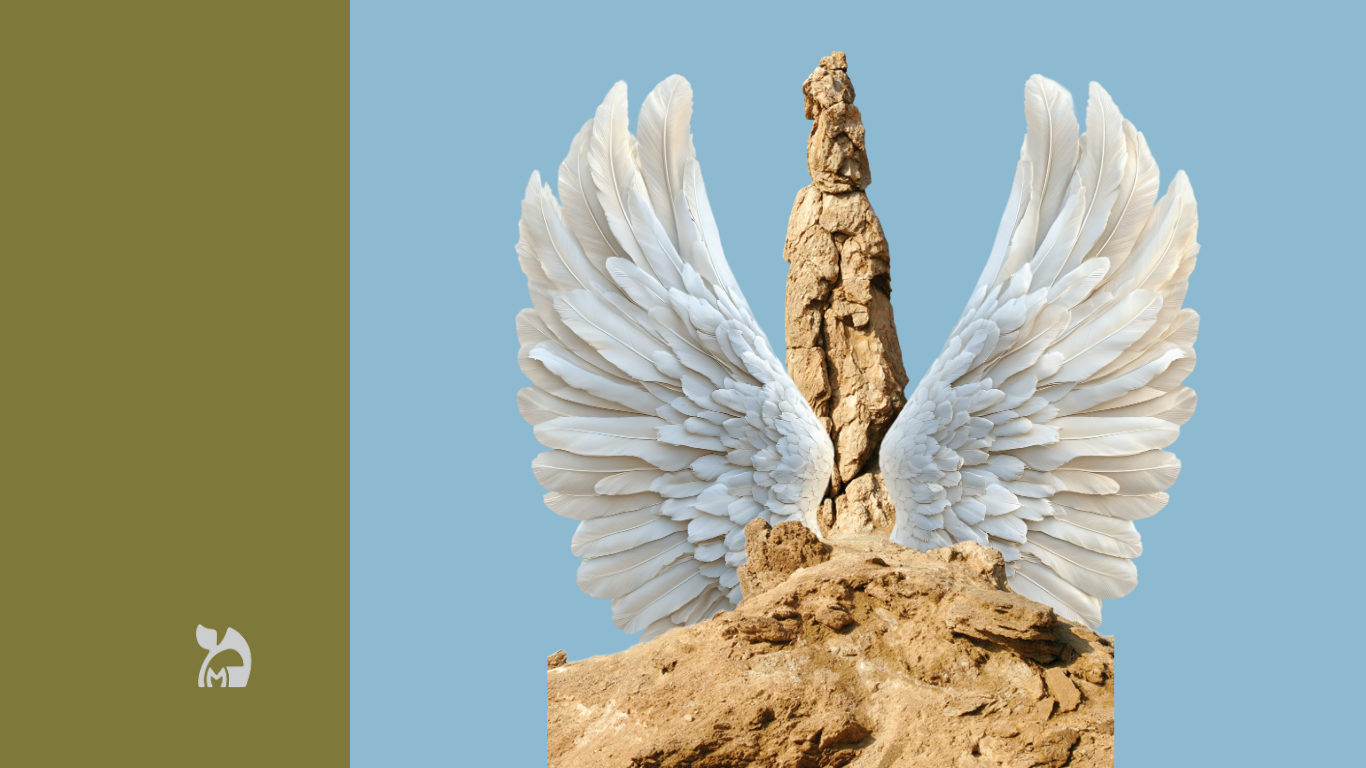
Parshat Vayeriah is jam-packed with action. Angels come to Abraham to tell him that he and his wife, Sarah, will have a child in their old age. Sarah, in her biblical 80s and in menopause, is weary of this proposition and lets out the laugh from which Isaac would take his name. Abraham and G-d go off to have a little heart-to-heart about Sodom and Gomorrah. Despite Abraham’s bargaining and pleading on their behalf, nothing could save them from God’s wrath. The story then flashes to Sodom, where angels come to Lot to tell him of the impending destruction. The townspeople descended on Lot’s door demanding to know, in the biblical sense, the angels inside. In an effort to protect his honored guests, Lot offers his two daughters to them instead. The men were unimpressed, but Lot was able to escape with his life. The angels break the bad news to Lot and his family about the aforementioned destruction. In looking back at the fiery ashes of all of her friends, Lot’s wife is turned into salt. Lot’s daughters then ply him with wine in the cave they’re sharing and become impregnated by their own father. The descendants of this incestuous forced coupling will become the Moabites and the Ammonites.
We then flash back to Abraham and Sarah on their way to Gerar for a little babymoon. Abraham, worried for his life, tells the king that Sarah is his sister. The king, overtaken by Sarah’s beauty, took her for himself. But don’t worry, God gave him a vision that she was married before anything untoward happened. When they get back, Sarah is pregnant and eventually gives birth to Isaac. After having her own child, Sarah is unable to continue to abide the presence of Hagar, her former maidservant, and Ishmael, Hagar and Abraham’s son. Eventually she forces Abraham to cast them out into the wilderness. Hagar and Ishmael are saved from the barren wilderness by Hashem. The parsha wraps up with the story of the binding of Isaac.
In this parsha, we have what is essentially the totality of Abraham’s father-and-son dynamics. By the end of the parsha. He has sent one to die in the wilderness and the other by his own hand. Despite our typical view of him as a creator, Hashem is at the core of the destruction of not only both of these relationships, counseling Abraham to listen to Sarah about Hagar and Ishmael and commanding him to sacrifice Isaac, but also the destruction of Sodom and Gomorrah.
There has been intense philosophical, religious, and academic debate over the mortal sin of Sodom. While some have focused on the homosexual nature of the demand made by the men of the city, others point to their cruelty, violence, and a lack of the kind of hospitality we see from Abraham earlier in the parashah. Laws have even been passed in the name of the ancient city surrounding sexual immorality. Many have used the burial and complete destruction as a justification for their existing homophobic beliefs. While the Torah does clearly and unequivocally denounce male same sex relationships, this story offers neither a command about nor condemnation of homosexuality. As an aside, many are willing to hedge their arguments about the Torah’s aforementioned denouncement in Leviticus, but I find all of the arguments to be reconciliations of their desired outcome with the text; however, that is a discussion for a later parsha. Regardless of their veracity, these interpretations have been used to cast members of our community into the proverbial wilderness.
As Hagar was cast out of the home into which she had been sold, she too experienced isolation. Her life up until that point had not been a cakewalk. Women in biblical times, even those who weren’t enslaved, lacked basic rights and autonomy. Hagar had been forced to leave her home and sold to someone she likely had not known. Sometime later, Sarah, her owner, gave her to Abraham, her other owner, so that he could forcibly impregnate her. Hagar lacked the structural power to consent to her relationship with Abraham and so was forced to carry his child. And yet even this was not enough to gain her autonomy over her and her son’s future. Hagar finds herself alone in the desert with only her young son. Out of desperation and out of water, Hagar places Ishmael into a bush so that she doesn’t have to watch as the desert takes him; however, they are saved by an angel.
For too many, Hagar’s stories hold a mirror to the treatment they have received in their own communities. Those who have been shut out of shuls, school, and shabbos tables for no fault of their own. They are absent from our community because we have decided their mere presence, the simple fact of their existence, is too much for us to bear. Whether the atrocity is not conforming to our ideas of gender norms or to our beliefs about who they should love. They too have been cast out of their homes. They too have been made to wander in the wilderness. They too have had to carry the burden of our lack of hospitality. Our inability to welcome those who are different from us.
Who have we cast out from our midst because their presence was inconvenient for us? And how can we, like an angel of Hashem, offer them salvation for the desert of their isolation?