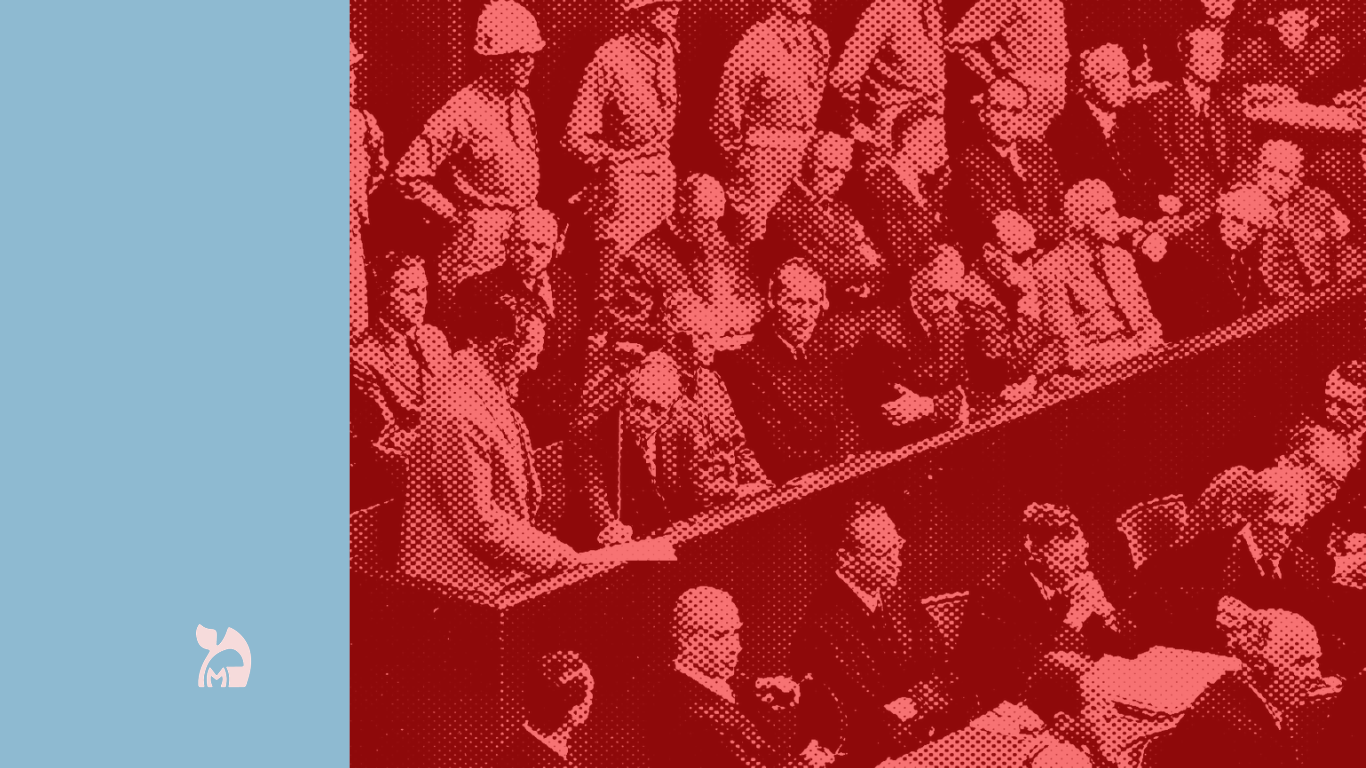
On Oct. 16, 1946, the International Military Tribunal (IMT) completed the First Nuremberg Trials by hanging 10 of its 24 defendants. These defendants were accused of some of the worst crimes in human history, and although it didn’t include some of the highest-ranking leaders like Adolf Hitler or Heinrich Himmler, it served to foster a message that no crime of such magnitude would be allowed ever again; at least that’s what we should be taught.
At the conclusion of World War II (WWII), the horrors of the Holocaust had been exposed in full force. People throughout the world wanted a form of justice for this grave horror, as well as many of the Nazi regime’s other crimes, including crimes against peace (starting a war of aggression without any justification), genocide against other groups (like Romani, disabled, or gay people), and mass murder against civilians, especially on the Eastern Front. More than 40 million people were killed across Europe as a direct result of WWII. The world had an unquenchable thirst for justice against those they deemed responsible, the perpetrators of the Third Reich.
The Nuremberg Trials were held in Nuremberg, Germany. The leading judges were made up of Americans, British, French, and Soviet authorities, but the witnesses and leading experts were made up of people from all walks of life. Some Holocaust survivors and those directly affected by the war were called in for questioning by both the Allied prosecution and the German defense. The defense was made up of the high-ranking leaders left from the Third Reich, including Hermann Göring (who was considered the 2nd-in-command, and was the head of the Luftwaffe), Ernst Kaltenbrunner (the highest-ranking SS officer on trial), Hans Frank (the governor of German-occupied Poland), and Joachim von-Ribbentrop (the minister of Foreign Affairs and leader of talks like the Molotov-Ribbentrop Pact). Most of the arguments from the defense relied on the inability to refuse orders given to them, or the events being too big for them to control, blaming Hitler for his propaganda and authority, and many other arguments to help shift the blame. None of the 24 defendants pleaded guilty to their charges.
By the end of the trial, the vast majority of the 24 defendants’ arguments of ‘superior orders’ had been rejected, as it was not deemed an arguable defense. Many of the main defendants’ testimonies and subsequent defendants’ testimonies reveal that they were more than willing to commit the actions themselves, and none of them were considered to have been forced ‘under the threat of death or physical harm’ to commit these actions, so the defense quickly fell apart. Whether this is true or not, it set a precedent dictating that a soldier who simply claims to have been following orders cannot use that as an effective defense, for reasons including their own willingness to commit the actions, and the fact that they submitted the orders despite having the authority to not do so, which would have saved countless lives. This defense also does not eliminate the defendant’s personal responsibility, although it may lessen the punishment for those crimes, depending on how accurate the claimed testimony is.
Of all 24 defendants, one, Martin Bormann (Secretary of the Party), was tried in absentia (he was likely killed by enemy forces or died by suicide during the Battle of Berlin). Another, Robert Ley (Head of the German Labor Front), died by suicide before he could be tried. Gustav Krupp (chairman of Krupp, an important munitions company), was considered too ill to stand trial. After the trial concluded, only 3 men were acquitted: Franz von Papen, Hjalmar von Schacht, and Hans Fritzsche, who were deemed not to have been responsible for the atrocities committed. Hjalmar von Schacht’s story is particularly interesting, as despite being the head of economics, he fell out with the Nazis over more tyrannical practices and, according to some, refuted some of the more violent initial policies against Jews. (This has been disputed). The rest were found guilty of some charge, and 12 were sentenced to death. As mentioned, Bormann was not present at the trial (he was sentenced to death in absentia); however, Göring (also sentenced to death) took his own life via cyanide the day before his judgment. Some Nazi officials openly expressed remorse for their actions, including Hans Frank, who hoped that people would learn to prevent such horrible tragedies, and begged for forgiveness from God.
The story of the Nuremberg Trials does not end on Oct. 16, as subsequent trials sentenced more groups like the Einsatzgruppen (death squads), and Camp Commandants to death or life imprisonment (some received lesser sentences). The lessons of that trial also continue to this day. Many deemed the trial controversial, as some considered the legal defense to be inadequate, while others considered the judgments to be too severe, or too lacking (especially the Soviet Judges). International courts and charges of crimes against humanity (previously not a legal term) were established, and international conventions on the laws of war or humanity were also established, partially as a result of the Nuremberg Trials and the consequences of WWII.
As antisemitism resurfaces, however, much of the trial has been consistently ignored or forgotten. The rise to power is almost always conveniently left out in assessments of the brutality of the Holocaust, even in important government writings, and it’s only when it’s too late that the world begins to turn its head. Fritzsche, who served as a radio broadcaster, was one of the few defendants who expressed direct remorse for his role. He stated that people must never allow a tyrannical government like the Nazi regime to come into power again, and to always hold democratic ideals of the utmost importance. He also noted that after the Holocaust, those who continue to maintain racial politics are guilty of any tragedy that follows. Many of Fritzsche’s warnings have been left on deaf ears. It is also important to note that even propaganda ministers like Julius Streicher were sentenced to death for their roles in inciting mass murder and administering propaganda newspapers. This role is almost always forgotten, and today, those who continue to produce similar rhetoric and ideas are almost always allowed to continue without consequence, whereas those who criticize them often receive death threats or violent assaults.
It is important that when we acknowledge the Nuremberg Trials for the 80th anniversary, we don’t just remember the term ‘Nazi’, and pretend it is some extreme term that doesn’t apply to people today. We must also acknowledge the causes of the Nazi Party’s rise to power, and the crimes they started with and employed throughout their role, and its evolution into genocide and war. We must continue to remember WWII, and the justice that came from it, and heed the warnings of both the defense and the prosecution to never allow this to happen again.